Corporate Emotional Intelligence.
The emotional intelligence that is truly and readily accessible in our most intense moments of pressure. Designed by Gareth Chick over a forty-year corporate career and used by thousands of managers worldwide, CEQ is the method behind every programme, workshop and coaching engagement we deliver.
It may be daunting to think about starting to coach people. However, if we think of coaching as simply a leadership intervention, a one-off act that can make a real difference, we may just give it a try.
Gareth Chick · And the Leader Is… Transforming Cultures with CEQUnder pressure, the survival brain takes over.
In normal working, our amygdala senses threat, and acts like a circuit breaker between the ancient parts of our brain that look after our basic survival, and the neocortex that runs our rational systems of learning, decision making and communication. In threat situations the amygdala shuts off the circuit to the neocortex, putting us into fight or flight mode, our survival brain.
 Module 1 · EQ and NeuroscienceFrom Module 1 of the CEQ Coaching Methodology Programme: a simplified coaching model based on MacLean’s triune brain.





Choose a glowing marker or flip a card to explore each region. The dashed marker lies deeper, behind this view.
At the top sits the neocortex, the newest part of our brain and by far the largest. Its basic job is to prevent inappropriate responses – notice, not to choose appropriate ones.
The limbic system contains the amygdala, hippocampus, hypothalamus and thalamus. When the amygdala detects a change, neurons fire within the limbic system and create the matching emotional response: fear, anger, disgust, surprise, joy or sadness.
The most ancient part of our brain, shared with many other animals. It controls our basic physiology: our breathing, our blood flow, keeping us upright. No thinking, just pure unconscious programming passed down through our genes.
Our radar, constantly sweeping our environment for any change. When it senses threat, it triggers fight, flight or freeze, and cuts us off from our thinking brain.
Figures as set out by Gareth Chick in Corporate Emotional Intelligence: Being Human in a Corporate World (2018), drawing on the work of Peter Afford.
We are hard wired to survive, not thrive.
We can learn to thrive and choose to do good, but under pressure, with our amygdala tweaked, we default to survival. So the method starts with awareness of our unconscious, controlling habits (OUCH!), and replaces them with new ones, practised until they’re in our muscle memory. It’s also why the first Coaching Trigger is simply Calm the Fish.
Try Module 3 free: OUCH!i and Calm the Fishi.
The Three Brains model above is a piece of Module 1 of the CEQ Coaching Methodology Programme. Module 3 of the online self-study programme is where you meet ARIA: your own habits, live, in a real conversation.You’ve met the three brains and the amygdala. Now learn to calm them: Module 3 of the online self-study programme is where you meet ARIA and your own habits, live, in a real conversation.
One AI-guided practice round with ARIAi and a written debrief.
- Free sign-up with your first name and work email
- No card and no password
- 30 days’ access
CEQ stands on four pillars.
Working in a corporate environment conditions human behaviour in peculiar ways: well-meaning people behave in unnatural and often inhuman ways, driven by fear. The four pillars are the practical response: the things we have to become aware of, and then practise, to lead well under pressure.
OUCH!
The crucial physiological confrontation of how we are actually behaving when under pressure – the habits that have been developed through constant conditioning, and that have become unconscious and automatic. They only seem to work in the moment because everyone around us is trapped in the same insanity. We have to break these habits, and that only comes from practising new ones until they’re in our muscle memory.
The habits →Promoting Positive Learning
We are either learning negatively, through our increasingly conditioned responses to threat, or positively, through conscious consideration, deliberate action and immediate feedback in the form of consequences. Our brains are five times more sensitive to negative feedback than positive, so we have to work five times harder at nurturing positive learning in our teams. It is not a nice-to-have; it is essential.
Read more →Transparency and Vulnerability
Human beings are naturally messy, emotional, clumsy, imperfect. Corporatism desperately tries to condition these unhelpful and inconvenient dynamics out of its employees. So leaders have to create and then nurture a working environment that allows people to be human, developing skills in observation, coaching and facilitation. We simply have to stop punishing people for struggling. And rather than vulnerability as a manufactured device, the vulnerability that comes with transparency is real and palpable.
Read more →A Grip on Reality
We treat the org chart as if it were a solid and linear physical structure; we treat targets as if they were immutable states of being once achieved, and we treat milestones and KPIs and metrics as objects in their own right as opposed to indicators that are there to guide us. And in all of this we lose our grip on what is truly real – the people we have relationships with who are affected by our actions. Without a strong touchstone to reality, we simply won’t have the humility we need to be trusted and to lead with real authenticity, and therein lies the road to hubris.
Read more →OUCH! Our Unconscious Controlling Habits.
The biggest single obstacle to our changing anything about how we lead is our complete lack of awareness of our controlling habits. Why would we change if we are unaware of how we are really behaving, particularly if we already think we’re doing the right things?
We become aware, and with awareness comes true choice. Now we can put new habits in their place; things as simple as asking open questions one at a time, allowing people a few seconds to think and respond, asking a question again if the person does not answer first time around and not accepting that they don’t know the answer. Put simply, the three main unconscious controlling habits that get in our way as leaders are closed questions, filling silences and giving multiple inputs.
One ~40-minute practice round with ARIA, with a written debrief. Just your first name and work email; no card details or password needed.
- We ask closed questions (like machine gun fire!)
- We fill silences (anything over a few nanoseconds with so much cortisol banging around)
- We answer our own questions (if we waited for them, for goodness sake)
- We let people answer a different question (we can’t be rude, and besides we probably didn’t notice anyway)
- We make statements (since they are clearly lacking motivation, our words will inspire them)
- We give multiple inputs (it’s quicker to dump out a stream of consciousness, it being so valuable)
- We use we instead of you (we want to be inclusive and we are scared of being direct)
- We issue instructions (tell me, explain to me, take me through your thinking)
- We interrupt and talk over people (only if what they’re saying is nonsense, of course)
- We finish people’s sentences for them (well, we knew what they were saying, but they were taking forever)
Seven triggers for coaching in the moment.
We often believe that to coach someone we have to set up a formal coaching session. But coaching, now the predominant leadership style, is simply the way we are with people. Each trigger is taught and practised in our workshops and programmes.
Calm the Fish!
If we walk into a meeting, a 1:1 or even an ad hoc conversation by the water cooler carrying the slightest anxious energy, our people will pick it up instantly and their fight or flight will be triggered. So the first trigger, our instant and unconscious signpost to coach, is simply Calm the Fish. This alone helps us regulate our own energetic state.
Truly Great Feedback Hurts
What people need from us is feedback, and that is all feedback is: information. It should be factual and evidence based, like the video replay any athlete watches with their coach after a match. The great thing about feedback is that when it’s given well, it’s often all we need.
Come From Curiosity, Not Judgement
People know when they are being judged, and they defend themselves. Ask someone a question that comes from judgement, and you will get a defensive or evasive response; maybe even a lie. It won’t matter if your question is legitimate. But ask them from a place of genuine curiosity, and you will get both a truthful and a revealing answer.
Hold the Person, Not the Problem
We must learn to hold the person, not the problem. In our interactions with people we always focus on the problem at hand, and the other person almost gets in the way. Everything we need to know as a coach is there in front of us, if only we pay attention.
Take People Out of Their Comfort Zones
If someone comes to you as their boss, manager, leader or coach and asks for help or guidance, it is because that’s what they need. They’ve tried all the obvious stuff. They’re bright. They know that whatever they do next will mean stepping outside their comfort zone. A coach takes a person outside their comfort zone, and holds them there while they learn and grow.
Create Right Brain Thinking
Right brain questions carry the energy of hope, possibility and, most importantly, human connection. We don’t need to understand the other person’s problem; we simply need to understand them. A favourite is What ideas are you playing with at the moment? because it deliberately invites play.
Get Their Finest Version to Solve Their Problem
Ask managers what percentage of their personal potential they deliver at work, and the average answer invariably comes out at about 65%. We all instinctively know there is more to come. Once we have that version of the person in front of us, we can drop our questions right down to the bottom levels and get their finest version to solve the problem, and own the solution.
The beliefs that get in the way.
The biggest problem most managers have in achieving excellence in coaching is that we tend to believe the myths that surround the term itself. The purpose of coaching is to realise people’s full potential whilst holding them accountable for results.
We believe that coaching is soft and fluffy
That coaching is not being tough on people or driving better performance out of them, but that it is being more gentle and understanding, and needs an immense amount of patience to allow people to come to their own decisions and processes.
It takes longer to coach people than to simply direct them
And it is this belief that stops us from investing in the skill development needed. It is the same barrier that stops us from delegating to people, since it is often quicker to do it ourselves than to explain to someone else.
Teaching people is coaching them
When we explain a process, a guideline or a company rule to people, we tell ourselves that we are coaching them, and we often confuse the two.
We genuinely tell ourselves that we know how to coach
Coaching is a term much used in modern leadership, yet when asked to define it we struggle. Once we understand this, we are freed from relying on our old habits, and we gain permission to behave as a coach, however unskilled or clumsy we may be at it.
We are already coaching our people
Coaching is not a normal, everyday, superficial, matey conversation. It is a structured dialogue, controlled by the coach, with a direction and an intent. When we believe we are coaching, we are usually being more inclusive and consensual, and perhaps even more polite, but we are not coaching; we are simply directing people more subtly. We may even be guilty of manipulation.
The five myths, in full.
Gareth’s article on the beliefs that stop managers coaching, and what coaching actually is.
Read the article →GROW+, question crafting and Logical Levels.
Open questions are powerful. They work so well because they multitask for us – they work on several levels, but basically they do two jobs at once. They make the other person think, and start the process of them accepting responsibility, and they communicate so much of the position that we are taking as the coach – acceptance, confidence, belief, the fact that there is a solution, the fact that there are other options, support; the fact they are not alone. So if asking open questions is so fundamental, we had better get good at them. Question crafting is one of our core processes.
GROW+
GROW (Goal, Reality, Options, Will) is Sir John Whitmore’s framework. CEQ’s enhancement is GROW+, where the plus is permissioned reinforcing feedback at the end.
Question crafting →Logical Levels
As Robert Dilts puts it, a problem cannot be solved at the level at which it presents itself. As a coach, all we need to do is listen hard, work out which level they are on, and then ask a question that they have to answer at a different level.
Logical Levels →SuperListening
A magical thing happens when we choose to listen intently. We get drawn into the narrative, become intrigued, curious and desperate to know how the story ends, and so we naturally ask open questions, and they feel heard.
SuperListening →The books behind the method.
The method on this page comes from Gareth Chick’s two books. Signed copies are posted from CEQ, with an optional dedication written by the author.
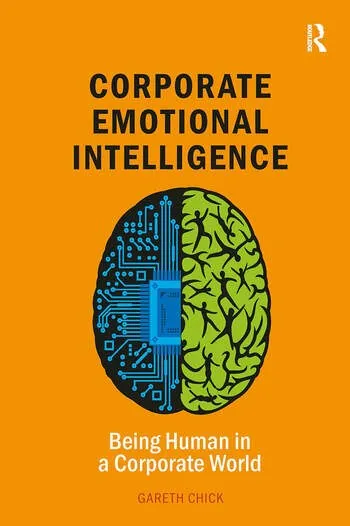
Corporate Emotional Intelligence
Being Human in a Corporate World (2018)
The why: what corporate life does to our instincts, why coaching is so hard inside it, and the neuroscience underneath OUCH! The long-form version of the three brains, the unconscious controlling habits and the four pillars of CEQ.
Shortlisted · Business Book Awards, Embracing Change →- A signed copy, posted to you
- UK postage and packing included
- An optional dedication, written by the author
Signed by Gareth. £25 including UK delivery. UK delivery only.
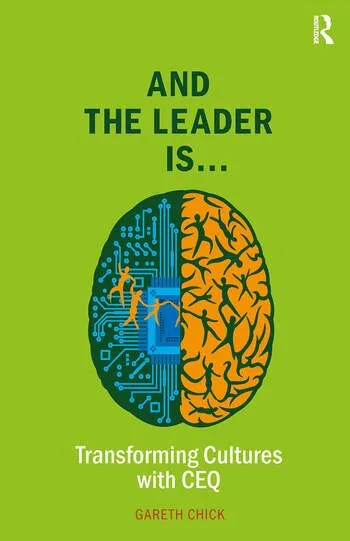
And the Leader Is…
Transforming Cultures With CEQ
The companion volume, and the practical one: the five myths, the seven Coaching Triggers, question crafting and SuperListening, set out in full with the stories behind them. The book most people keep on the desk.
Companion to Corporate Emotional Intelligence →- A signed copy, posted to you
- UK postage and packing included
- An optional dedication, written by the author
Signed by Gareth. £25 including UK delivery. UK delivery only.
At your own pace, online, or in the room.
 CPD ACCREDITED
CEQ Coaching Methodology Programme
The CEQ method in two halves, offered in three immersive formats, with AI-guided rehearsal and reflection throughout.
 CPD ACCREDITED
Practical Coaching Skills Workshop
A half-day experiential team workshop drawing on both halves of the Coaching Methodology Programme, equipping team leaders with fundamental coaching skills.
Coaching Mastery Programme
Put the method into practice: SuperListening, SuperNoticing, Breakthrough Coaching and role play, in two live, experiential modules with a maximum of eight.

Leading with CEQ
Coaching, authentic leadership, change and strategy, built on the four pillars, for senior and fast-track leaders.
All prices exclude VAT.
How we can help.
Coaching5 services
- 1:1 executive coachingConfidential, face to face or online.→
- Coaching skills programmeSelf-study, live online or in person.→
- Coaching workshop for managersHalf a day, for your whole team.→
- Neurodiversity coachingAssessments, coaching and training.→
- AI coaching with ARIAPractice and reflection for every manager.→
Leadership5 services
- Leadership programmesIncluding 12-month Leading with CEQ.→
- Authentic leadershipTrust, humility and real authenticity.→
- Executive team developmentOffsites and support for your top team.→
- High performing teamsFor functional teams and their leader.→
- Selling and influencingInfluence stakeholders inside and out.→
Change5 services
The change commences from the moment of first contact.
Our in-house experience as senior operational executives, combined with our methodologies in Coaching, Leadership and Change, means we are uniquely equipped to engage with you at the earliest stage of your thinking, whether you are planning an organisation-wide transformation or a relatively straightforward L&D curriculum. Our role is to add value, not simply to sell you programmes, and certainly not to build dependency upon us.